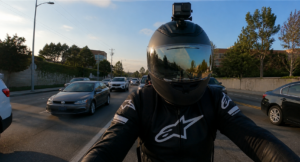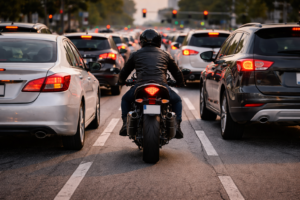
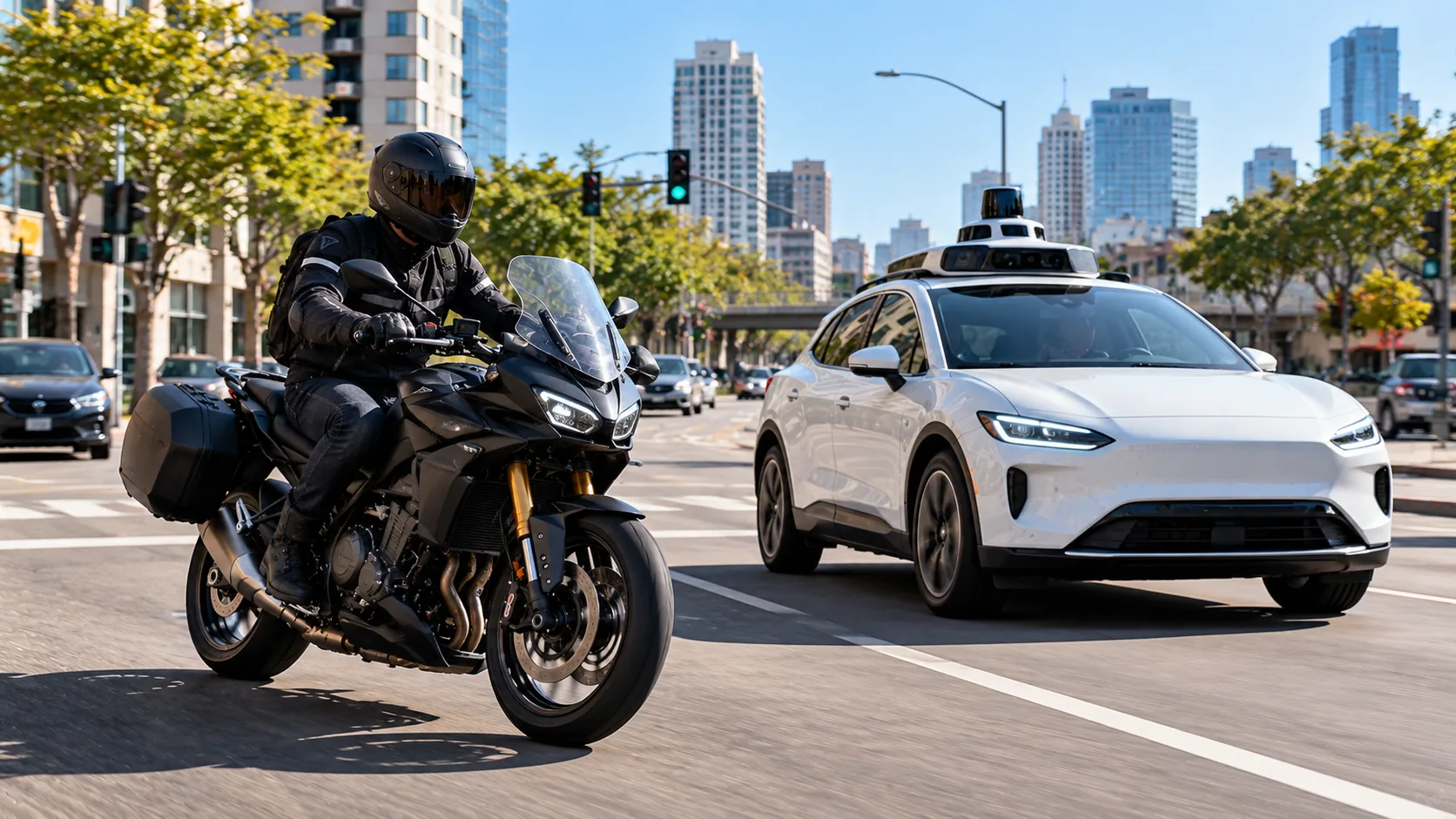
Driverless taxis are becoming a familiar sight on American streets, and motorcyclists increasingly share intersections, turning lanes, and busy corridors with vehicles that have nobody behind the wheel. That change raises an important question: who may be legally responsible when a robotaxi and a motorcycle collide?
Robotaxi motorcycle accident liability is not determined simply by the absence of a human driver. Investigators must examine what each vehicle did, whether traffic laws were followed, how the automated driving system responded, and what evidence is available. Insurance and product-liability rules may also come into play.
The question is particularly timely in 2026. The National Highway Traffic Safety Administration (NHTSA) announced new automated-vehicle initiatives in July, while California adopted updated autonomous-vehicle oversight rules earlier in the year.
Why Robotaxi and Motorcycle Collisions Are a Growing Legal Issue
Automated vehicles may use cameras, radar, lidar, mapping, and computer systems to interpret traffic conditions. Some operate without a human driver within approved areas. But detecting a motorcyclist is only one part of driving safely: a vehicle must also anticipate turns, judge distances, yield when required, and respond appropriately to unexpected movement.
Motorcyclists present distinctive visibility challenges because of their narrow profile and changing position in a lane. The NHTSA motorcycle safety guidance emphasizes that riders face substantial risks and that other road users must remain alert to them.
These concerns do not establish that robotaxis are less safe than conventional cars. Safety claims should be evaluated using comparable driving exposure, locations, and crash severity—not raw collision totals alone.
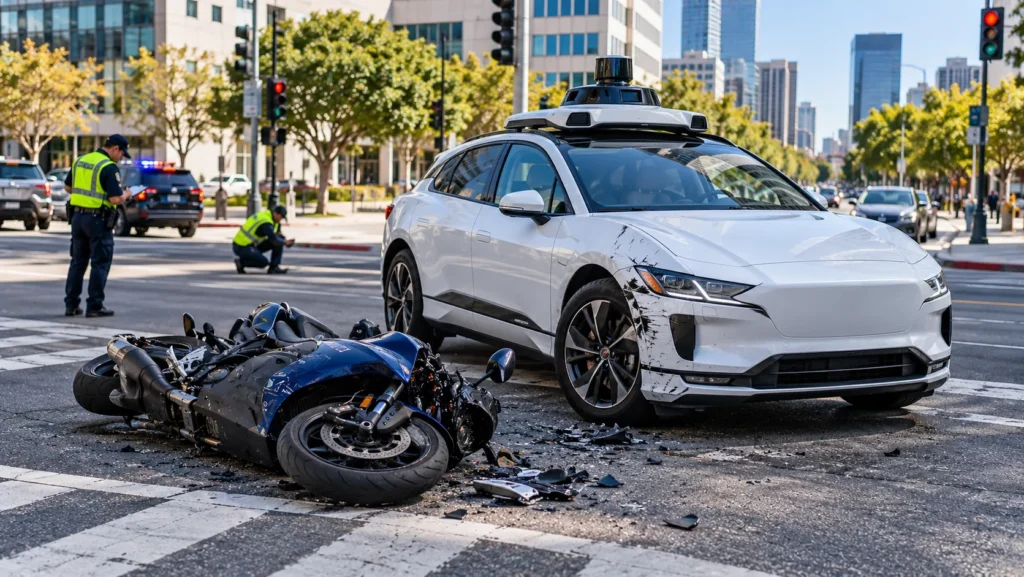
Who Could Be Liable When a Robotaxi Hits a Motorcycle?
Responsibility depends on the state, the crash circumstances, the vehicle’s operating mode, and the available proof. Potentially relevant parties include:
- The automated-vehicle operator: A company running the service may face claims based on its own conduct, applicable duties, or legal responsibility for fleet operations.
- The vehicle or system manufacturer: A product-defect claim may be considered if a defective component, unsafe design, or inadequate warning contributed to the collision.
- A maintenance or service provider: Improper repair, inspection, or sensor calibration may matter if supported by evidence.
- Another motorist: A third-party driver may have caused the sequence of events, even if a robotaxi was involved.
- The motorcyclist: Speed, right-of-way, lane positioning, and other actions may affect fault allocation under applicable state law.
There is no automatic rule that a robotaxi company must pay whenever its vehicle is involved. Likewise, the lack of a human driver does not automatically excuse the company’s conduct. A careful fact-specific analysis is necessary.
How Do Traffic Laws Apply Without a Human Driver?
Traditional traffic rules still matter: signals, right-of-way, safe turns, following distance, and lane changes remain central to reconstructing a crash. States have also developed different systems for authorizing and regulating autonomous vehicles.
For example, the California DMV’s April 2026 announcement describes expanded reporting, remote-operation standards, and enforcement measures. Some provisions took effect immediately; others are phased in. The National Conference of State Legislatures’ autonomous-vehicle database helps readers identify how state approaches differ.
Motorcycle-specific rules remain important too. A rider’s position between lanes may be lawful in one jurisdiction and restricted in another. Our guide to lane splitting and filtering explains why state law cannot be treated as uniform.
What If the Robotaxi’s Sensors Failed to Detect the Rider?
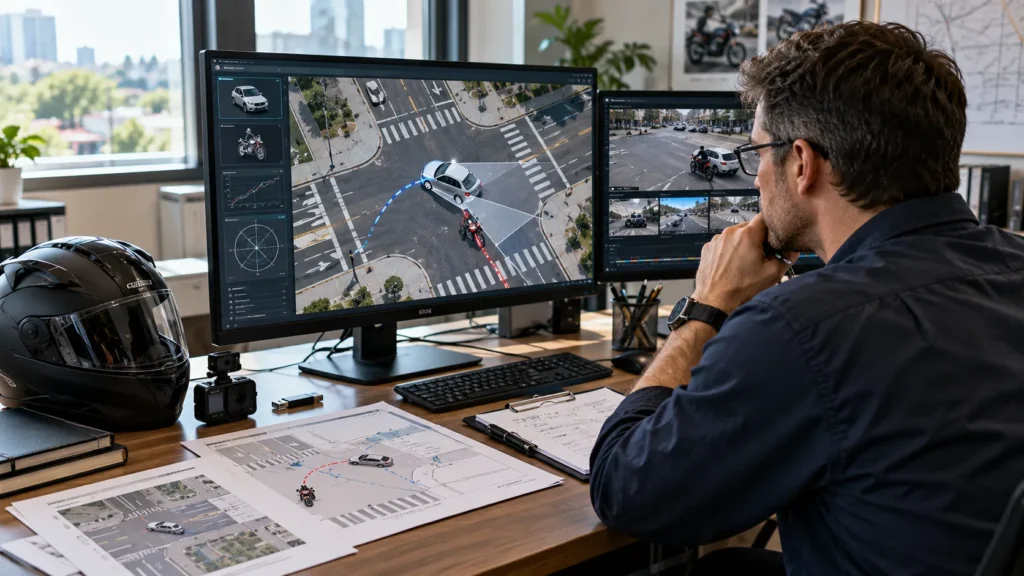
A rider may reasonably wonder whether cameras or sensors failed to identify a motorcycle in time. Possible questions include whether the system recognized the bike, predicted its path, assessed an intersection correctly, or initiated braking. Obstructed sensors, software behavior, environmental conditions, and vehicle maintenance may also require examination.
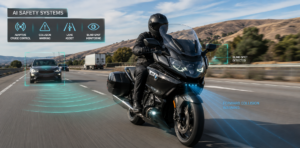
However, an unusual maneuver is not proof of a software defect. Investigators need technical data and the full traffic context. These questions differ from rider-facing technology, which we discuss in our article about motorcycle AI safety systems.
Evidence of a product defect may require specialized testing and expert testimony. Whether the resulting claim is based on negligence, product liability, or another theory depends on the facts and governing law.
Which Evidence Matters After a Robotaxi Motorcycle Crash?
Evidence can be unusually important because automated vehicles may produce information unavailable from ordinary cars. Depending on the system and access rights, relevant material might include:
- Onboard camera footage and available sensor recordings
- Vehicle speed, braking, steering, and location records
- Automation-engagement and remote-assistance records
- Software versions, maintenance history, and diagnostic logs
- Motorcycle helmet-camera video, witness statements, and photographs
- Traffic-signal timing, road markings, and police documentation
NHTSA’s Standing General Order on crash reporting requires covered manufacturers and operators to report qualifying incidents. Its public data can help identify reported events, but NHTSA cautions that reports may be incomplete and are not a determination of fault.
A motorcyclist’s own recording may preserve the moments before impact. Our article on motorcycle camera laws and accident evidence discusses how footage may support an investigation.
Can Riders Obtain Robotaxi Video and System Logs?
Not necessarily on request. Vehicle operators may retain video or telemetry, but obtaining it can depend on company practices, privacy requirements, litigation procedures, and the relevant jurisdiction. Public crash databases typically do not contain every raw recording or internal technical log.
For this reason, prompt preservation can matter. An injured rider or their representative may request that potentially relevant material be preserved. Avoid assuming data will remain available indefinitely. An attorney familiar with local evidence procedures can assess whether formal requests or legal process are appropriate.
California also offers an autonomous-vehicle incident reporting page for members of the public. Submitting an incident report to a regulator is different from filing an insurance claim or proving civil liability.
How Insurance May Work After a Robotaxi Collision
A collision involving an autonomous vehicle may still involve familiar insurance questions: whose coverage applies, whether a claim is contested, what injuries are documented, and who was legally responsible. The precise policy structure may differ between commercial fleet vehicles and privately owned cars.
Claims may concern emergency care, follow-up treatment, lost income, damaged riding equipment, motorcycle repairs, and other legally recoverable losses. Available compensation varies with state law, policy terms, causation, and fault.
Do not assume that a company will admit liability simply because its vehicle has no driver. Nor should a rider assume that their own insurer has no role. Review policy documents and communicate with insurers carefully, especially if several parties or policies are involved.
What Should a Motorcyclist Do Immediately After a Crash?
- Prioritize safety and medical attention. Move away from immediate danger when possible, contact emergency services, and follow medical advice.
- Document the scene. Photograph the vehicles, visible damage, road signs, intersection layout, and any distinctive autonomous-vehicle identification.
- Record witnesses and report details. Obtain contact information and the incident or police-report number when available.
- Preserve original footage. Keep helmet-camera files, photographs, and messages in their original form, with backups.
- Track expenses and symptoms. Save repair estimates, medical records, receipts, and missed-work documentation.
- Consider timely legal advice. State deadlines and government-entity claim rules may differ, so avoid relying on an assumed universal filing period.
For broader crash prevention, NHTSA encourages riders to follow traffic laws, use appropriate protective equipment, and ride defensively. Those practices remain relevant whether surrounding cars are human-driven or automated.
Will New Autonomous-Vehicle Rules Change Rider Rights?
Possibly, but changes are not automatic or identical nationwide. Federal agencies address vehicle safety and reporting, while states regulate many aspects of road use, insurance, and civil liability. California’s updated rules emphasize oversight and operational data, and the California Public Utilities Commission has strengthened reporting requirements for autonomous passenger services.
More detailed reporting may help regulators identify safety patterns and may provide investigative leads, but it does not automatically make a reported operator legally responsible in an individual crash. Technical evidence still needs to be interpreted in context.
Final Thoughts
Robotaxi motorcycle accident liability is an emerging issue with familiar foundations: road rules, reasonable care, reliable evidence, and applicable insurance or product-liability law. A driverless vehicle’s involvement changes the investigation, but it does not eliminate the need to determine what actually caused the crash.
As autonomous fleets expand, riders benefit from understanding both conventional motorcycle protections and the new role of digital records. Good documentation, informed safety practices, and careful attention to state law can help make complicated incidents easier to evaluate.