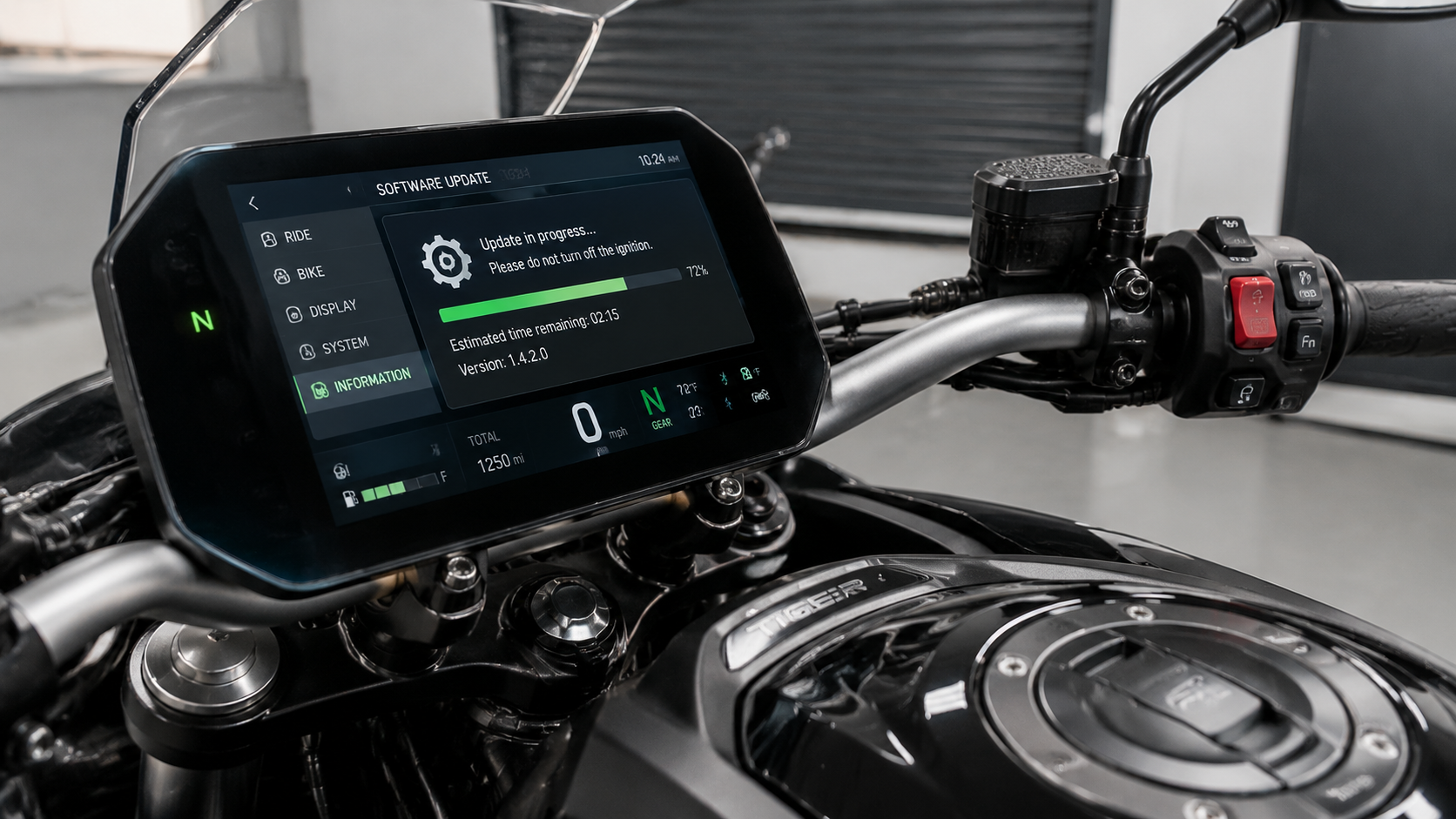
Modern motorcycles are no longer purely mechanical machines. Many now rely on advanced electronics, sensors, and software systems that control everything from traction control to braking behavior. In some newer models, manufacturers even push over-the-air (OTA) software updates that change how the motorcycle performs.
While these innovations improve safety and performance, they also introduce a new legal question: who is responsible when a software update contributes to a crash?
This article breaks down how motorcycle software updates work, the potential legal risks, and how liability may be determined after an accident involving updated systems.
What Are Motorcycle Software Updates?
Motorcycle software updates are digital improvements or changes sent by manufacturers to update onboard systems. These updates can occur at dealerships or, in newer models, wirelessly through OTA technology.
They may affect systems such as:
- ABS (Anti-lock Braking System)
- Traction control settings
- Throttle mapping
- Cornering stability control
- Rider assistance systems
- Dashboard and sensor calibration
Some manufacturers use updates to fix bugs, improve safety features, or enhance riding performance. However, changes in system behavior may sometimes feel noticeable to riders immediately after installation.
For general vehicle safety standards, see the NHTSA Vehicle Software Overview.
Why Software Matters in Motorcycle Accidents
Traditionally, motorcycle crashes were analyzed based on road conditions, rider behavior, and mechanical failure. However, software-controlled systems add a new layer of complexity.
If a motorcycle behaves differently after an update—for example, changes in braking sensitivity or throttle response—it may influence rider control in critical moments.
In accident investigations, experts may now examine:
- Recent software update logs
- System error reports
- Electronic control unit (ECU) data
- Sensor calibration history
This means digital data is becoming just as important as physical evidence.

Can a Software Update Cause a Crash?
In some cases, riders report changes in how their motorcycle behaves after a software update. While most updates are tested extensively, no system is perfect.
Possible issues may include:
- Delayed throttle response
- Unexpected ABS activation changes
- Traction control sensitivity shifts
- Sensor misalignment after calibration updates
These issues do not automatically mean a defect exists. However, if a malfunction contributes to a crash, investigators may look deeper into whether the software behaved as intended.
For product liability principles, you can review resources from the American Bar Association.
Who May Be Liable After a Software-Related Motorcycle Crash?
Liability in motorcycle accidents involving software updates can be complex. Several parties may potentially be involved depending on the circumstances:
- Manufacturer: If a defective update caused unsafe performance
- Software developer: If third-party systems were involved
- Dealer or service provider: If the update was installed incorrectly
- Rider: If misuse or improper maintenance is a factor
Each case depends heavily on evidence such as update records, system logs, and expert technical analysis.
Learn more about defect liability at the Federal Trade Commission Product Safety Guide.
How Evidence Is Collected After a Crash
Motorcycle manufacturers now store more digital data than ever before. After a crash, investigators may examine both physical damage and electronic records.
Key evidence may include:
- Event Data Recorder (EDR) logs
- Software version history
- Error reports or fault codes
- Sensor and GPS data
This information may help reconstruct what happened before and during the crash.
You can also read related motorcycle legal topics here: Motorcycle Camera Evidence Guide
Are Riders Notified About Software Risks?
Manufacturers typically inform riders when software updates are available. However, the complexity of technical changes is not always fully explained in simple terms.
Some updates may improve safety, while others adjust performance characteristics that riders may not immediately notice.
This raises an important legal question: should riders be clearly warned when updates change how the motorcycle behaves?

What Riders Should Do After a Software Update
After receiving a software update, riders may want to take extra precautions to ensure safety and familiarity with their motorcycle’s behavior.
Recommended steps include:
- Test ride in a low-traffic area
- Check for unusual braking or throttle response
- Review manufacturer update notes
- Monitor dashboard alerts closely
- Ensure all systems are functioning correctly
These steps may help identify unexpected changes early before riding in heavy traffic conditions.
How Motorcycle Laws May Evolve
As motorcycles become more connected, legal frameworks may need to adapt. Current motorcycle laws primarily focus on rider behavior and mechanical safety, but software introduces new challenges.
Future regulations may address:
- Mandatory software update disclosures
- Standardized safety testing for updates
- Data access rights after crashes
- Manufacturer accountability for OTA systems
Government agencies like NHTSA are already studying vehicle automation and software safety, which may influence future motorcycle regulations.
Related Motorcycle Law Articles
For more legal insights, explore these related topics:
Final Thoughts
Motorcycle software updates are reshaping how modern bikes operate. While these systems can improve performance and safety, they also introduce new legal complexities that were not present in traditional motorcycles.
As technology continues to evolve, riders, manufacturers, and lawmakers will need to adapt to ensure safety, transparency, and fair liability standards in the event of a crash.