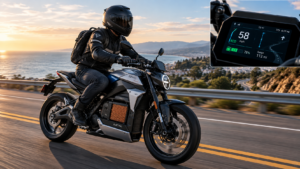
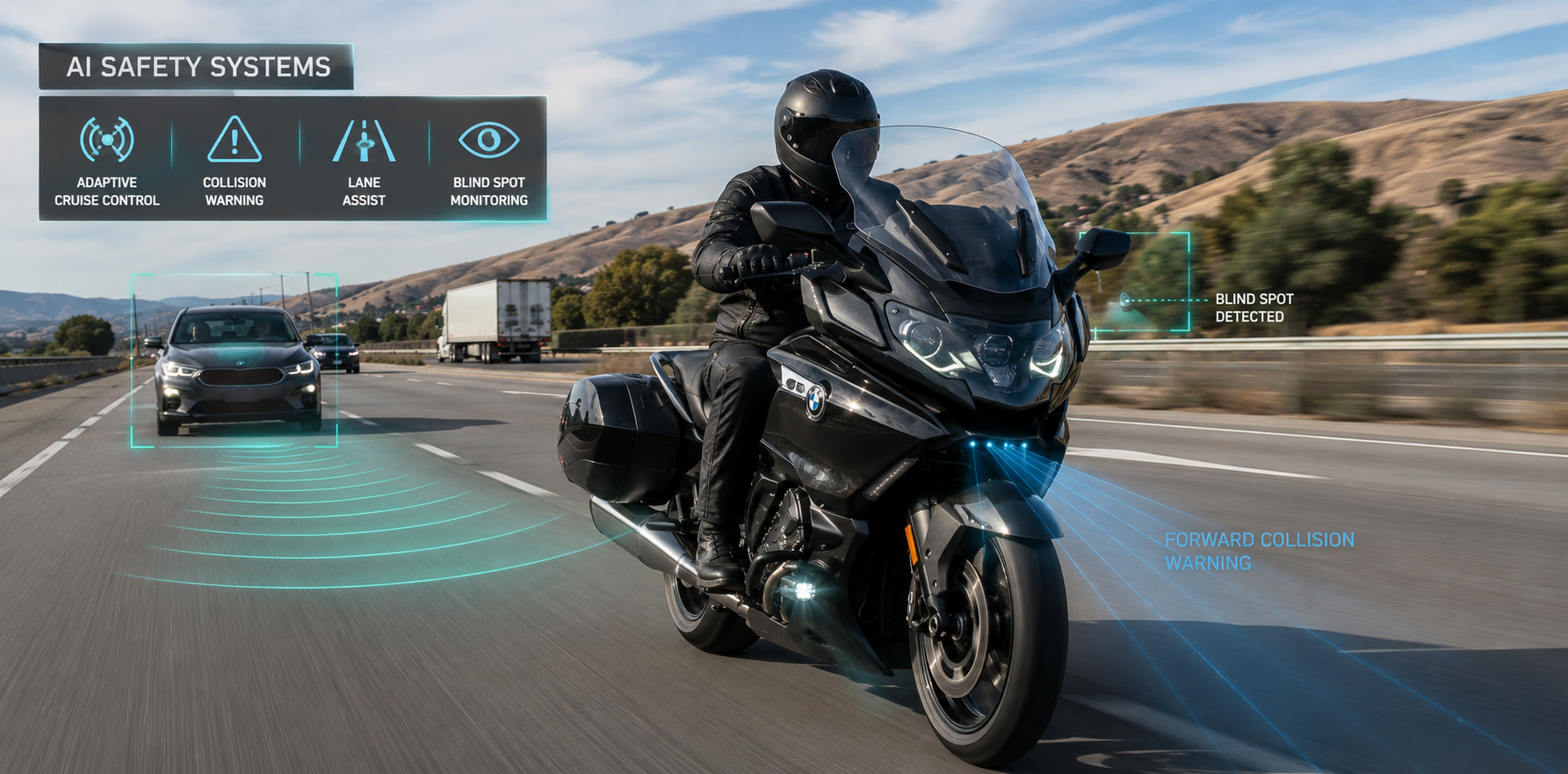
Motorcycles are entering a new era of technology. Features that were once limited to luxury automobiles are now appearing on motorcycles across the United States. Blind-spot monitoring, adaptive cruise control, collision warning systems, traction control, and AI-assisted rider safety technologies are becoming increasingly common on new models.
As manufacturers continue introducing advanced rider assistance systems, many riders are asking important questions. Do these systems make motorcycles safer? Can riders rely on them? And if a crash occurs, who may be responsible when technology is involved?
This guide explains how motorcycle AI safety systems work, what legal issues may arise, and what riders should know before relying on these emerging technologies.
What Are Motorcycle AI Safety Systems?
AI safety systems use sensors, cameras, radar units, and software to help riders identify potential hazards. While these technologies do not replace rider judgment, they are designed to provide additional information that may help reduce risks.
Common examples include:
- Blind-spot monitoring
- Forward collision warnings
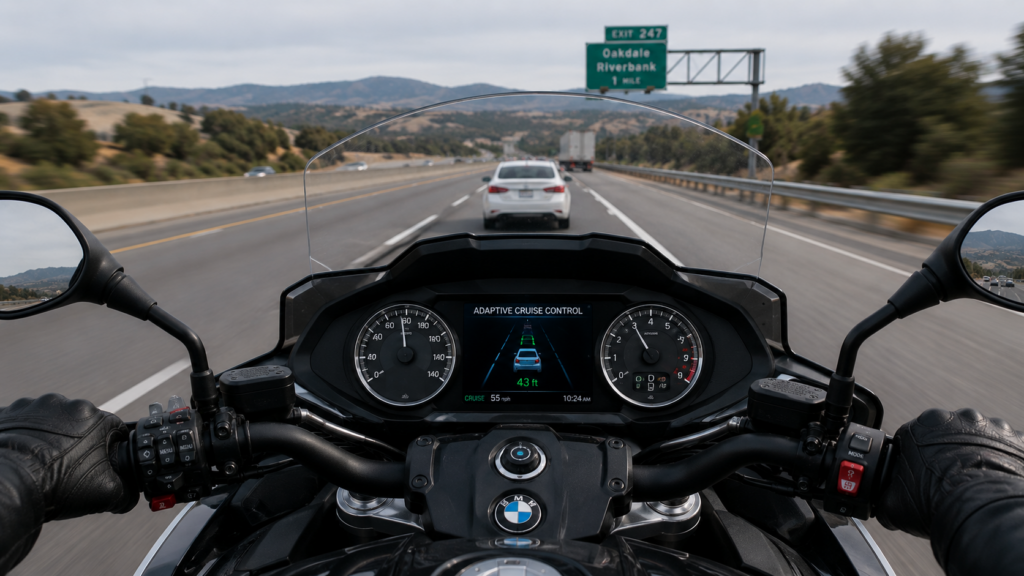
- Adaptive cruise control
- Emergency braking assistance
- Cornering traction control
- Radar-based hazard detection
Several manufacturers have introduced versions of these technologies on touring, sport-touring, and premium motorcycles.
For information about motorcycle safety technology, visit the National Highway Traffic Safety Administration.
Why AI Technology Is Becoming Popular Among Riders
Motorcyclists face unique risks compared to occupants of passenger vehicles. Riders have less physical protection and are often harder for drivers to see.
Advanced rider assistance systems are designed to help address some of these challenges. Radar sensors may detect vehicles approaching from behind. Collision alerts may warn riders about closing distances. Adaptive cruise control may assist during long-distance travel.
As motorcycle technology continues evolving, many riders view these systems as an additional layer of safety rather than a replacement for defensive riding.
Can Riders Rely Completely on These Systems?
The short answer is no.
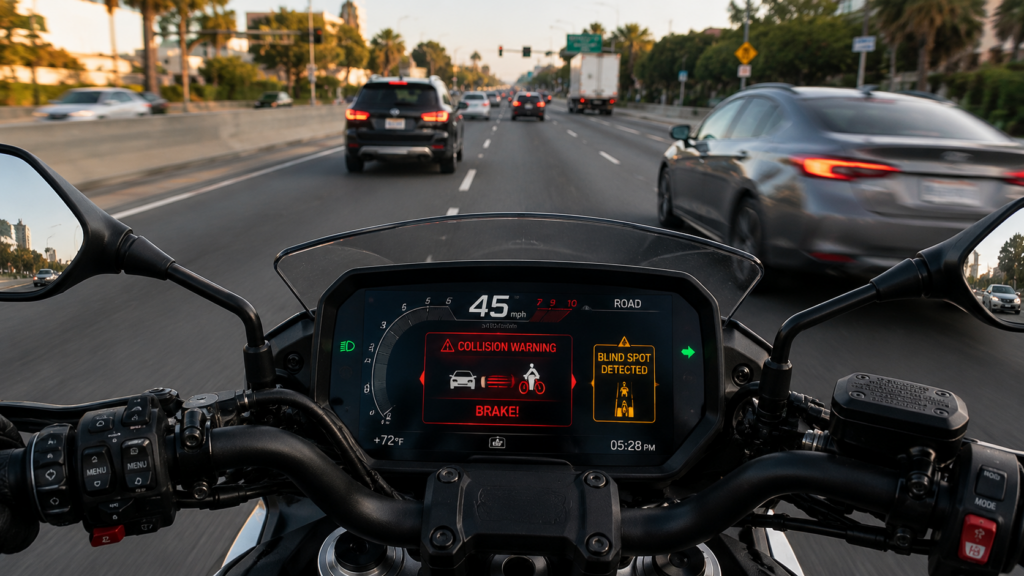
Manufacturers generally describe these systems as assistance technologies. They are designed to support rider awareness rather than take control of the motorcycle.
Environmental conditions, weather, sensor limitations, and roadway factors may affect performance. Riders should continue monitoring traffic conditions and maintaining full control of the motorcycle.
Many motorcycle manuals specifically state that rider assistance systems have limitations and should not be relied upon as the sole source of hazard detection.
What Happens If an AI Safety System Fails?
This question is becoming increasingly relevant as more motorcycles incorporate advanced technology.
If a safety system malfunctions, liability may depend on the circumstances surrounding the incident. Potential factors may include:
- Mechanical defects
- Software errors
- Maintenance issues
- Improper modifications
- Rider actions
- Third-party driver negligence
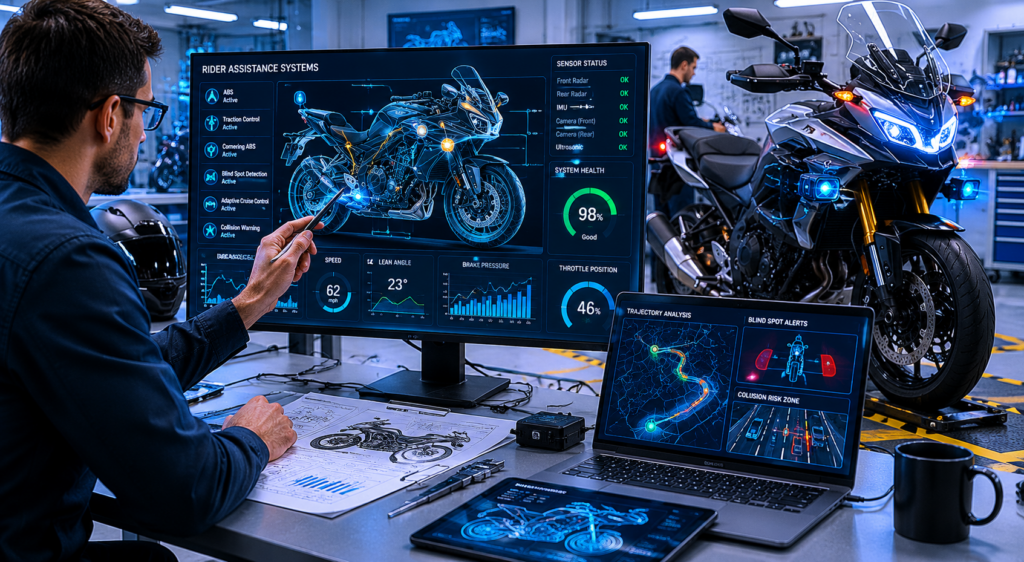
Determining fault may require technical investigations, maintenance records, and data collected by the motorcycle’s onboard systems.
The Insurance Institute for Highway Safety provides information regarding motorcycle safety technologies and crash prevention efforts.
How Technology May Affect Accident Investigations
Modern motorcycles generate more data than ever before. Some systems record information regarding speed, braking, throttle input, and safety system activity.
When an accident occurs, investigators may examine available data to better understand what happened before impact.
This creates new opportunities and challenges. Digital records may provide valuable information, but they may also raise questions regarding privacy, data ownership, and interpretation.
These issues are likely to become more important as connected motorcycles become more common.
Could Manufacturers Face Liability?
Product liability claims involving motorcycle technology may become more common as advanced safety systems continue developing.
If a defect in hardware or software contributes to an accident, investigators may examine whether the product functioned as intended.
Potential areas of concern may include:
- Defective sensors
- Software programming errors
- Inadequate warnings
- Design flaws
- Manufacturing defects
Each situation is unique, and outcomes often depend on specific facts and evidence.
For additional information about product safety standards, visit the NHTSA and the Society of Automotive Engineers.
How Riders Can Use AI Safety Systems Responsibly
Technology may provide useful assistance, but rider judgment remains critical.
Some practical considerations include:
- Learning how each system operates
- Understanding system limitations
- Following manufacturer recommendations
- Keeping sensors clean and unobstructed
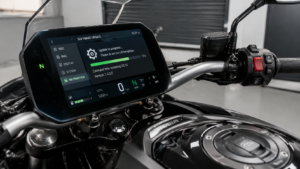
- Maintaining software updates when available
- Continuing defensive riding practices
Technology functions best when combined with proper training and awareness.
Related Motorcycle Law Topics
If you enjoy learning about motorcycle laws and emerging technologies, you may also find these resources helpful:
- Lane Splitting and Filtering: What You Need to Know
- Motorcycle Camera Laws and Accident Evidence Guide
- State-by-State Motorcycle Law Breakdown
- Helmet Laws Across the U.S.
The Future of Motorcycle Technology
Artificial intelligence is expected to play a larger role in motorcycle design over the coming years. Manufacturers continue investing in radar systems, predictive hazard detection, and connected vehicle technology.
Future motorcycles may communicate with nearby vehicles, traffic infrastructure, and navigation systems to improve safety awareness.
The motorcycle industry is moving toward a future where technology and rider skill work together.
Industry developments can be followed through resources such as Motorcyclist Online and RevZilla Common Tread.
Final Thoughts
Motorcycle AI safety systems are changing the riding experience. Technologies such as adaptive cruise control, blind-spot monitoring, and collision alerts may provide additional awareness for riders. However, these systems are designed to assist rather than replace rider judgment.
As motorcycles become more advanced, legal questions involving technology, data, liability, and rider responsibility may continue evolving. Understanding how these systems work may help riders make informed decisions while staying safe on the road.